Rethinking Wheat: My Fresh-Milled Flour Journey
Rethinking Wheat: My Fresh-Milled Flour Journey
I've been on a gluten-free diet for 20 years, avoiding wheat breads because they were "the enemy". I experienced better digestion and improved symptoms on a gluten-free diet, and I lost weight while avoiding wheat. I avoided wheat products like they were poison because I would get terrible stomach aches when I ate them.
But recently, my thinking has changed on the topic of wheat.
I’ve been introduced to fresh-milled grains after listening to a podcast by Sue Becker, a food scientist, who learned that wheat is not the enemy. It was the milling process that changed in the early 1900s that was the start of industrialized flour processing. In 1992 she learned the facts from the scientific research she was doing, and started to tell the world about the virtues of freshly-milled grains, including wheat, and challenging the promotion of a gluten-free diet.
I studied food science in the 1980s at the University of Washington, Seattle, and I, like Sue, did not hear about the history of flour-milling, yet I intuitively purchased freshly milled flour by Bob’s Red Mill (out of Portland) and Manna Mills (the local mill in Seattle), because it sounded healthy and probably reminded me of how I loved to bake breads, cookies, cakes, etc. with my mom when I was younger. And also, like Sue, I believed that if the flour was enriched, that was a good thing.
Now we know differently.
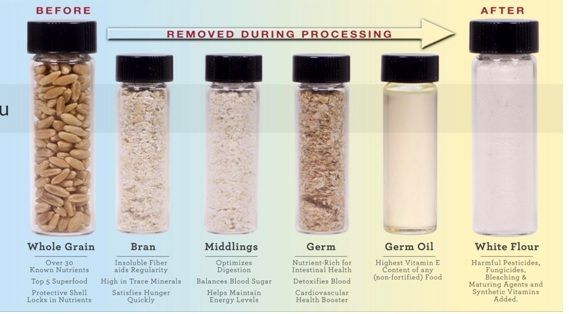
Modern diseases (heart disease, stroke, type 2 diabetes, hypertension, obesity, and colorectal cancer) started in America around 1905 when flour became processed and stripped of its healthy nutrients—the bran (fiber) and wheat germ (vitamins)—to be whiter and fluffier. Americans fell in love with white bread!
When wheat is milled with stainless steel industrial rollers, all of the bran and wheat germ is removed, along with all of those nutrients, and only four synthetic vitamins plus iron are added back in so it can be called "enriched". White bread was basically the endosperm (bare gluten structure), which the body does not digest very well. And Americans got sick on this type of bread.
The bran and wheat germ were sold for animal feed, which was quite lucrative. It took until 1941 for industry and government to reach a compromise and "enrich" the bread by adding just four synthetic vitamins back. Plus dough conditioners and bleaching agents were used to whiten the flour. No wonder people feel better when they remove store-bought wheat breads from their diet.
The Nutritional Power of Fresh-Milled Flour
Of the 44 key essential nutrients our bodies need to sustain life, we get 40 of them in one slice of fresh-milled wheat bread. It is like eating a multi-vitamin, plus we get 5 grams of protein per slice! Isn't that amazing?
Whole grains are a nearly perfect food. They provide over 30 essential nutrients plus soluble and insoluble fiber.
My Personal Breakthrough
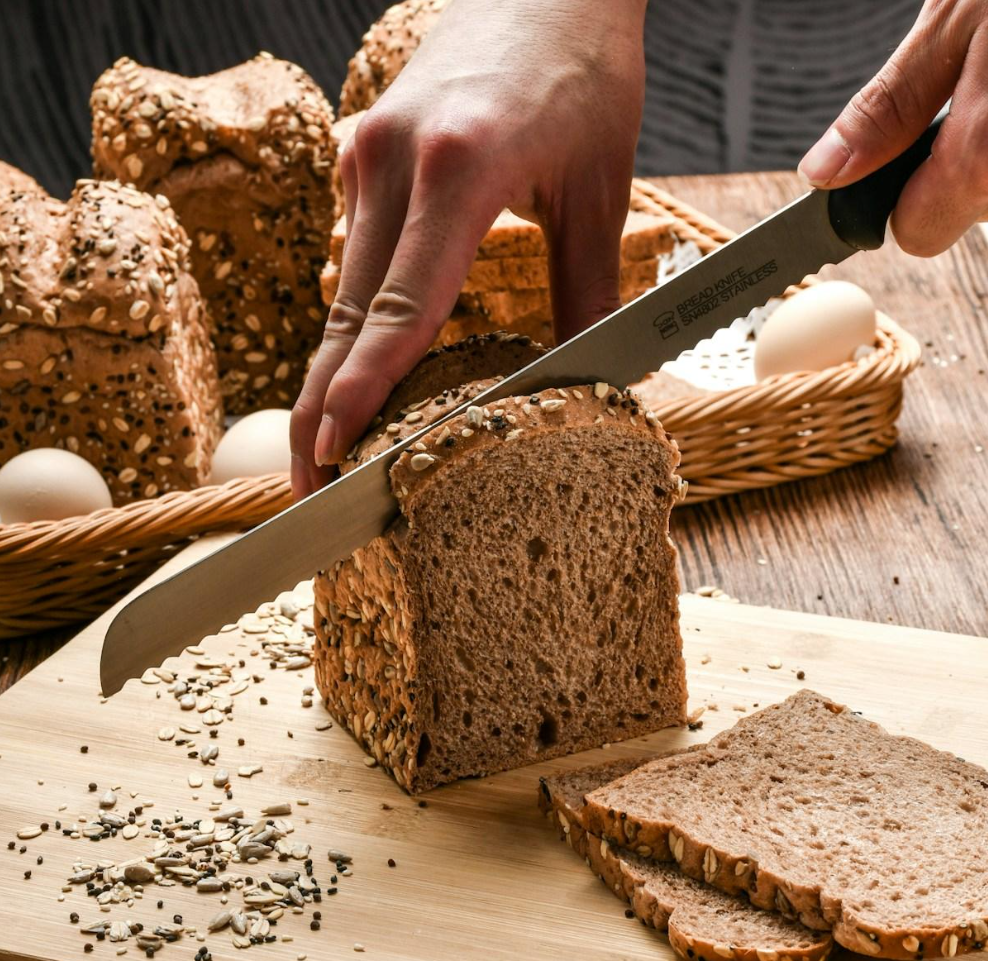
Before I heard about fresh-milled flour, I had discovered that sourdough bread did not upset my stomach, even though it was made from wheat. The local Prager Brother's Bakery makes delicious sourdough, so I gingerly experimented with their products… then I discovered they fresh-mill their flour and have been doing so for years. After being gluten-free for 20 years, this was a big deal!
This has been life-changing for me. I feel so good about feeding my family nutrient-dense food—nourishing, filling, satisfying...so health-giving.
Jesus said, "I am the bread of life; whoever comes to me shall not hunger and whoever believes in me shall never be thirsty." John 6:35
There are many references in the Bible to bread and now I know why. Jesus called himself the Bread of Life—He is the source of spiritual nourishment and eternal life, contrasting Himself with the Manna God provided to the Israelites—bread from heaven to give life to the world. Jesus is all that we need.
In my next newsletter, I'll share more about the specific health benefits of fresh-milled flour, how easy milling actually is, and practical resources to help you get started—whether you want to mill your own or find a local bakery that does it for you.
I would love to hear your stories or questions as you explore this topic!